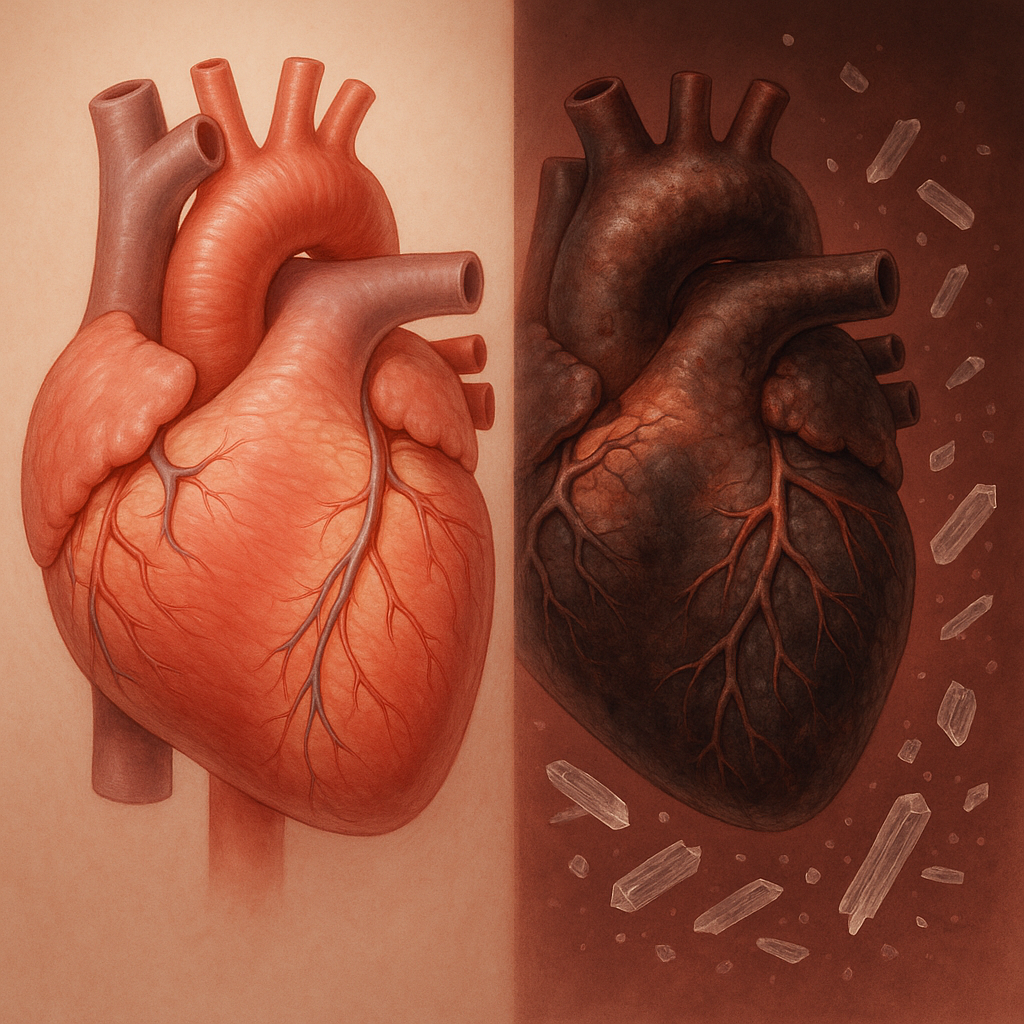
A striking new study from California has revealed something that might surprise you: methamphetamine use is now linked to one in six heart attacks in the state. While you might think of meth as a problem affecting only younger people, this research highlights a growing health crisis that’s touching communities across all age groups—and it’s important information for anyone concerned about heart health.
What the California Study Found
Researchers analyzing heart attack data in California discovered that approximately 17% of heart attacks—nearly one in six—were associated with methamphetamine use. This represents a significant increase from previous years and points to a troubling trend that’s affecting people of all ages.
The study found that patients who had used methamphetamine were often younger when they experienced heart attacks, but the drug’s impact on cardiovascular health affects users regardless of age. What makes this particularly concerning is that meth-related heart attacks tend to be more severe and carry higher risks of complications.
Why This Matters for Your Heart Health
You might wonder why a study about methamphetamine is relevant to you. The answer is simple: understanding all the factors that can harm your heart helps you protect it better. Additionally, if you have family members or friends who might be struggling with substance use, this information could literally save their lives.
Methamphetamine is a powerful stimulant that puts enormous stress on your cardiovascular system. When someone uses meth, their heart rate and blood pressure spike dramatically, which can trigger a heart attack even in people without existing heart disease. For those who already have conditions like high blood pressure, coronary artery disease (narrowed arteries that supply blood to the heart), or diabetes, the risks multiply significantly.
The drug causes several dangerous effects on your heart:
- Rapid and irregular heartbeat that strains the heart muscle
- Severely elevated blood pressure that can damage blood vessels
- Increased risk of blood clots forming in arteries
- Damage to the heart muscle itself over time
- Constriction of blood vessels, reducing oxygen flow to the heart
Recognizing the Warning Signs
Whether for yourself or loved ones, knowing the signs of both substance use problems and heart attacks is crucial. Heart attack symptoms can include chest discomfort, shortness of breath, pain in the arms, back, neck, or jaw, and unusual fatigue. If you experience these symptoms, call 911 immediately—every minute matters.
If you’re concerned about a family member or friend who might be using methamphetamine, look for warning signs like extreme weight loss, dental problems, unusual sleep patterns, agitation, or withdrawal from social activities. Remember, addiction is a medical condition, not a moral failing, and help is available.
Protecting Your Heart and Supporting Others
The best approach to heart health involves multiple strategies. Continue managing your chronic conditions as your doctor recommends, taking medications as prescribed, and attending regular check-ups. These fundamentals become even more important when we understand the various threats to cardiovascular health.
If you or someone you care about is struggling with substance use, resources are available. The Substance Abuse and Mental Health Services Administration (SAMHSA) operates a free, confidential helpline at 1-800-662-4357 that provides referrals to local treatment facilities and support groups 24/7.
For your own heart health, focus on the factors you can control: maintaining a healthy diet, staying physically active as your doctor approves, managing stress, getting adequate sleep, and keeping up with your medical appointments.
The Bottom Line
This California study serves as a wake-up call about the widespread impact of methamphetamine on heart health across all communities. While you may be managing your health carefully, being aware of this information helps you understand the full picture of cardiovascular risks and potentially help others who might be struggling.
Your heart health depends on many factors, and staying informed about emerging threats is part of taking care of yourself. By understanding these risks and maintaining open conversations with your healthcare providers, you’re taking important steps to protect your cardiovascular system for years to come.
Free Blood Pressure Tracker
Take control of your blood pressure and heart health with our simple daily tracker.
Start here:
https://milandwellness.com/blood-pressure-tracker/
Medical Disclaimer
This article is for educational purposes only and does not replace professional medical advice, diagnosis, or treatment. Always consult your physician regarding your health condition.